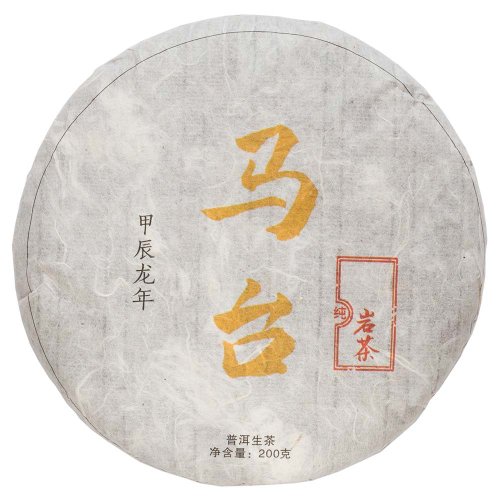
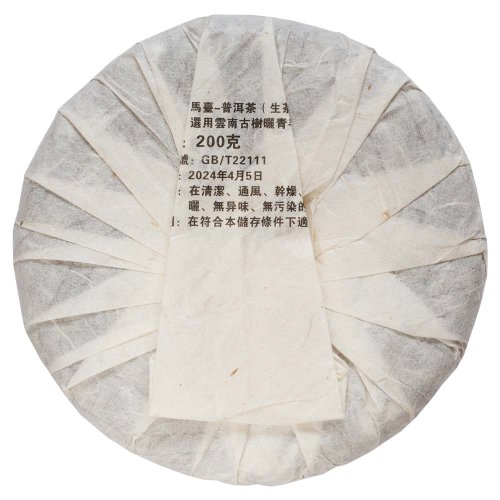
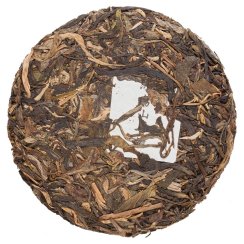
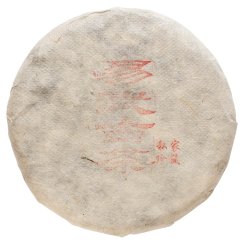
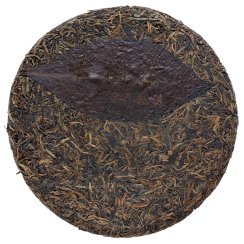
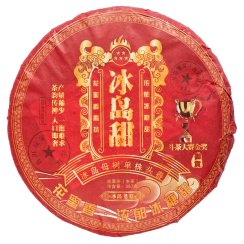
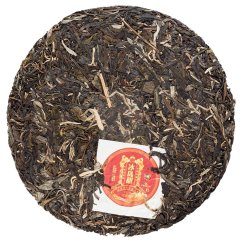
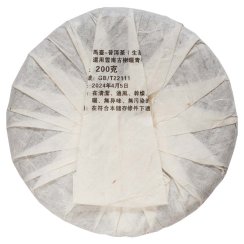
Old-tree Sheng Puer Ma Tai Gu Shu Sheng Pu Er 马台古树生普洱 from 2024 showcases the distinctive character of teas from Matai in Yunnan’s Lincang region. Its full-bodied flavour, with a pleasantly pronounced bitterness, gradually gives way to a long, sweet aftertaste. The tea comes from an elevation of around 1,650 metres and is pressed into a 200 g cake. A Sheng for lovers of assertive teas, well worth exploring over several short infusions. More
Ma Tai Gu Shu Sheng Pu Er 马台古树生普洱 is a raw, or Sheng, Puer from old tea trees in Matai, in Yunnan’s Lincang region. The 2024 vintage offers a strong, clean flavour in which bitterness and its gradual transition into a sweet finish play an important role.
This contrast is what makes the tea so appealing. An assertive sip gives way to an aftertaste that invites a brief pause before drinking again. The 200 g cake is particularly well suited to multiple infusions, allowing you to adjust the intensity and follow the tea’s changing character.
Flavour and a long, sweet finish
Matai stands out above all for its pronounced bitterness, which gradually gives way to a long, sweet finish. When tasting, pay attention not only to the strength of the infusion, but also to how quickly this transition occurs and the sensation that remains in the mouth afterwards.
In tea terminology, the returning sweetness after swallowing is called Hui Gan 回甘. It is easiest to appreciate when you pause between sips and allow the aftertaste to develop.
Bitterness and astringency are two distinct sensations. Bitterness is a taste, while astringency produces a tightening or drying sensation in the mouth. When brewing this tea, it is worth finding an intensity that allows its assertive flavour to leave enough room for the sweet finish.
Matai – a quiet tea-growing area beside the Lancang River
Matai 马台 is a small village in the Lincang 临沧 region, close to the Lancang River 澜沧江, which separates two areas of Yunnan — Pu’er and Lincang. This remote, peaceful place, away from the intense attention of tea traders, offers space to enjoy the presence of old tea trees in tranquillity and privacy.
Matai is not as famous as Lao Ban Zhang, Yiwu, Jingmai, Bingdao or Xigui. Perhaps this is precisely why it retains its evocative, age-old atmosphere. For lovers of tea and old tea trees, it is a real treasure.
Rocky gardens and old tea trees
China has many tea gardens, but only three locations are dominated by distinctly rocky terrain: Wuyi in Fujian, Feng Huang Shan in Chaozhou and Matai in Yunnan. Wuyi rock teas and Phoenix Dan Cong Oolongs rank among China’s ten finest teas, while Matai remains outside the spotlight — and perhaps that is part of its charm.
The main section of Matai’s old tea garden was established approximately two hundred years ago at an elevation of 1,650 metres. Most local teas come from here. There is also an older, lesser-known section that is neither widely known nor freely accessible. At night, moist air rises from the Lancang River into the gardens, forming clouds and mist. During the day, the garden’s southern exposure gives it full access to sunlight. This combination provides ideal conditions for the tea trees. They grow naturally here, without pesticides or chemical fertilisers.
The rocky soil supplies the trees with minerals that play an important role in the finished tea’s complex flavour.
Pronounced bitterness and a long, sweet aftertaste
Tea from Matai has a strong, clean flavour with an appealing bitterness that gradually transitions into a long, sweet aftertaste. Its character remains clear, without distracting elements. Old-tree tea from Matai is enjoyable when fresh and is also well suited to further ageing. You can begin exploring it now or set some aside and follow its transformation over time.
Origin is an important guide when exploring tea, but each vintage is also shaped by its harvest, processing and storage. Comparing several teas from Matai can therefore reveal both the area’s shared characteristics and the differences between individual productions.
Gu Shu and large-leaf tea plants
The term Gu Shu 古树 literally means “ancient trees”. For this product, the supplier states that the tea trees are 350 years old or more.
The plant material is listed in the specifications as Da Ye Zhong 大叶种, meaning the large-leaf type. This is a broad designation that does not, on its own, identify a single clonal cultivar.
The age of the trees describes the origin of the leaves, while the 2024 vintage indicates the age of the finished tea. Both pieces of information help put the tea into context; its character is best revealed through brewing and tasting.
Sheng Puer and its development over time
Sheng 生 refers to Puer that has not undergone the accelerated fermentation used to produce Shu Puer. Its base is sun-dried Mao Cha 毛茶, which can subsequently be steamed and pressed.
Under suitable storage conditions, Sheng continues to change. Some of its youthful sharpness may gradually soften, its aroma may evolve and its mouthfeel may develop. The pace of these changes depends on the original material, processing and storage conditions.
You can enjoy the 2024 vintage gradually while following its development. Store it in a clean place free from strong surrounding odours, away from direct sunlight and protected from excessive moisture.
Brewing recommendations
Gong Fu Cha brewing
Carefully separate 5 g of tea from the cake per 100–150 ml of water. Work along the layers, keeping the leaves as intact as possible. Use a gaiwan or small teapot and water at 95 °C.
Preheat the vessel, add the tea and take a moment to enjoy its aroma. You may briefly rinse the leaves and let them rest for a moment so the compressed piece begins to loosen.
Steep the first infusion for approximately 5–10 seconds, then pour it off completely. Start subsequent infusions with a similar steeping time. Once the leaves open, they may release their flavour more quickly; in later infusions, gradually extend the time.
Given the tea’s assertive character, we recommend starting with short steepings. If the infusion is too bitter or astringent, first shorten the time or reduce the amount of leaves. For a fuller expression, you can try water closer to 100 °C after your first tasting.
Western-style brewing
For brewing in a teapot or spacious infuser, use approximately 2–3 g of tea per 250 ml of water at 90–95 °C. Start with a steeping time of around 1 minute, then pour off the infusion completely.
For a stronger flavour, gradually extend the time. If the piece of tea remains tightly compressed, give it time and space to open; during the next infusion, the unfurled leaves may release their flavour more quickly.
The same portion can be steeped several times. We recommend first tasting the tea without sweeteners and pausing between sips to allow its sweet aftertaste to develop.