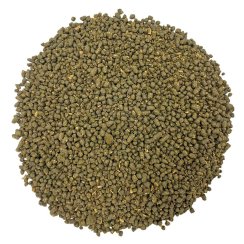

Hunan Golden Flower Dark Tea CTC | Hu Nan Fu Cha - Option: 75 g
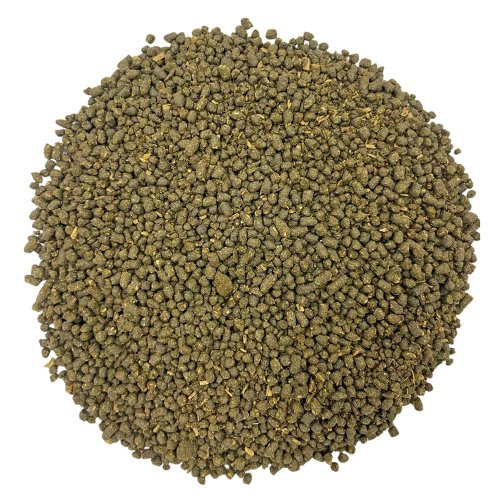
Hunan dark tea (Hei Cha 黑茶) with golden flowers Jin Hua (金花) is a traditionally fermented tea combined with modern CTC (Crush–Tear–Curl) processing. This method creates a finer structure, higher extraction, and a wider range of applications – from classic brewing to use in milk-based drinks, iced teas, and broader gastronomic contexts. More
This tea emerges from a place where tradition meets an unexpected direction of development. The province of Hunan has for centuries been home to dark teas, known as Hei Cha 黑茶 (hēi chá), whose character is shaped not only by processing, but also by time itself. Unlike other tea types, Hei Cha continues to evolve after production through a natural post-fermentation, gradually deepening and softening its profile.
One of its most distinctive features is the presence of so-called golden flowers – Jin Hua 金花 (jīn huā), a beneficial microflora that develops during the aging process. In traditional understanding, these “flowers” are a sign of quality and proper transformation. They are not an addition, but a natural result of the tea’s living evolution, contributing to a smoother, sweeter and more balanced character.
This particular tea, however, takes a different path. While traditional Hei Cha is typically compressed into bricks or cakes and prepared in a classic way, here a modern processing method is used – CTC (Crush–Tear–Curl). This technique breaks the leaves into small, uniform particles, significantly increasing extraction and allowing for a completely different range of uses.
The result is a tea that preserves its origin and identity, yet opens itself to contemporary applications. It can be brewed in a traditional way, but it also performs exceptionally well in milk-based drinks, iced teas, or modern beverage recipes. Thanks to its structure, it is suitable not only for home preparation, but also for cafés and wider gastronomic use, where consistency, speed, and reliability are essential.
In the cup, it offers an intriguing balance. The typical Hei Cha foundation – gentle earthiness, roundness, and depth – is complemented by softer, honeyed notes associated with the presence of Jin Hua. The CTC processing enhances body and immediacy, allowing the tea to fully express itself even in shorter infusions. The overall profile is smooth, without pronounced astringency, with a long and pleasant finish.
In traditional perspectives, such as those found in Traditional Chinese Medicine (TCM), dark teas are often associated with everyday balance and digestive harmony. These interpretations belong to a long-standing cultural context. Within the European framework, however, they are best understood as part of tradition rather than as specific health claims.
This tea thus represents a bridge between worlds. On one side stands the depth of Hei Cha tradition and the natural development of Jin Hua. On the other, a modern approach that expands how tea can be used today. It is not a compromise, but an extension – a tea that remains true to itself while adapting to contemporary ways of drinking.
| Form | loose tea (CTC) |
|---|---|
| Country of origin | China |
| Province | Hunan |
| Location | Anhua 安化 |

Post-fermented Teas Hei Cha 黑茶
Dark tea (Hei Cha 黑茶) is post-fermented tea, which means that after the tea leaves are oxidized after harvesting, they undergo accelerated controlled fermentation. For accelerated fermentation, the wet layering process ((Wo Dui 渥堆) is most often used, when biochemical reactions occur under the influence of microorganisms. In oxidation, biochemical reactions occur when interacting with atmospheric oxygen and typically last for several hours. The fermentation process can take several hours to several months, but can then continue without limitation for decades.

Fu Zhuan Cha 茯磚茶 - Tea Brick from Hunan
Dark tea has a long history in China, with different types produced in several provinces. The most important types include dark tea from Hunan, and its most distinctive variant is Fuzhuan Cha. The origin of Fuzhuan Cha dark tea is closely related to the nomadic peoples of northern and western China, such as the Mongols, Tibetans and Uighurs. Their diet, rich in meat, milk and bread, lacks fiber and vitamins, making tea essential for digestion and nutritional balance. They consider tea indispensable, even more so than food for a short time.

Eurotium cristatum (Golden Flower)
Eurotium cristatum (E. cristatum), commonly known as “golden flower”, is the dominant strain in the microbial fermentation process of Fu brick tea. E. cristatum has favorable biological characteristics, including enzyme production, antimicrobial properties, immune regulation, antitumor properties, fat reduction capabilities, and weight loss benefits. With its probiotic characteristics, E. cristatum can be combined with different varieties of tea substrates to make a variety of fermented teas. More importantly, in the process of tea fermentation, E. cristatum can secrete a variety of extracellular enzymes, including some hydrolytic enzymes and oxidoreductases. They metabolize and transform various chemical components in tea through a series of reactions such as oxidation, degradation, and condensation, which significantly affect the quality of tea.
Related products3
2022 Hunan Golden Flower Dark Tea | Tian Chi Hu Fu Zhuan Hei Cha - brick 500 g
8,04 € excl. VAT
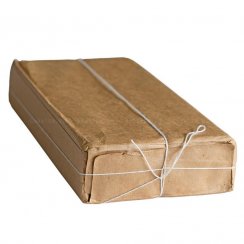
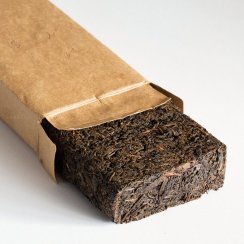
2017 Hunan Golden Flower Dark Tea | Zhou Jia Gou Fu Zhuan Hei Cha - brick 500 g
13,84 € excl. VAT
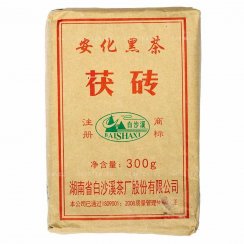
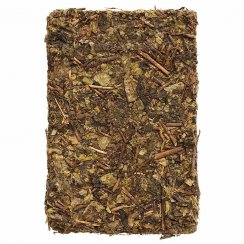
2008 Hunan Golden Flower Dark Tea | Bai Sha Xi Fu Zhuan Hei Cha - brick 300 g
10,45 € excl. VAT