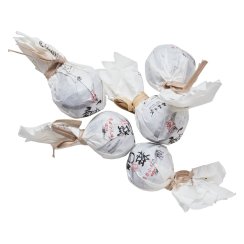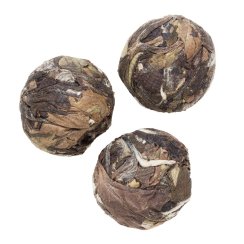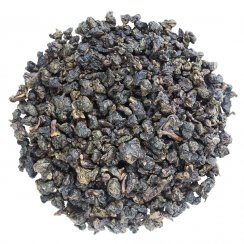

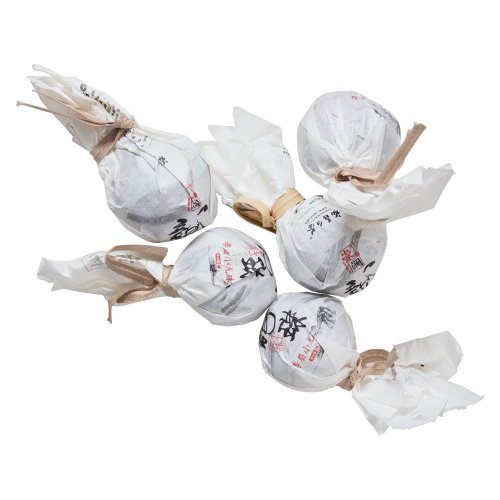
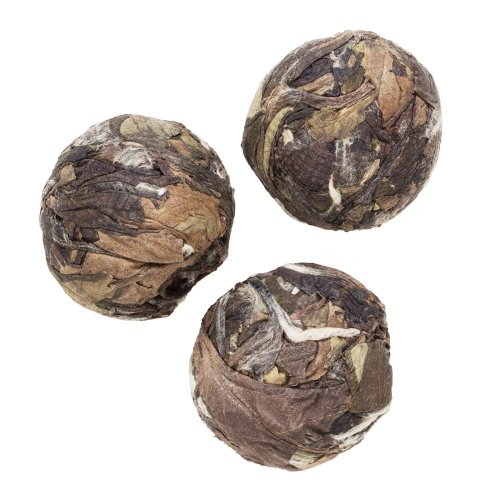


This premium white tea from the Taimushan 太姥山 mountains is pressed into small pearls known as dragon balls—an elegant and practical form that also supports slow, even aging. Harvested in 2021, it can now rightfully be described as Lao Bai Cha 老白茶 – aged white tea, a category that is highly respected and increasingly sought after in China. More
This premium white tea from the Taimushan 太姥山 mountains is pressed into small pearls known as dragon balls—an elegant and practical form that also supports slow, even aging. Harvested in 2021, it can now rightfully be described as Lao Bai Cha 老白茶 – aged white tea, a category that is highly respected and increasingly sought after in China.
Taimushan is regarded as the birthplace of traditional white tea. Local cultivars, cooler mountain climate, and frequent mist create teas with a delicate structure, rich natural content, and excellent aging potential. These qualities make Taimushan white teas ideal for long-term maturation.
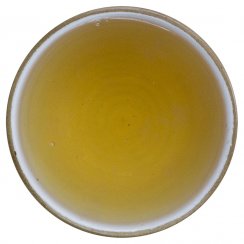
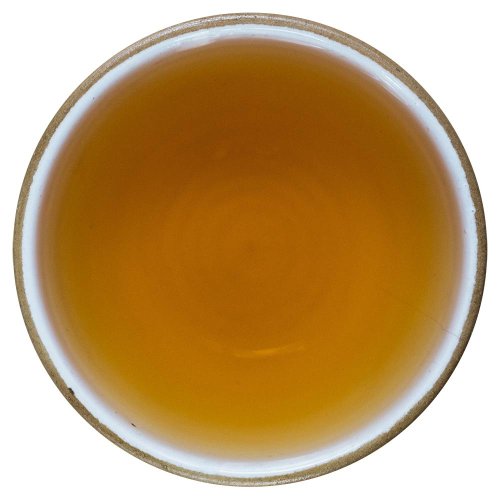
Over several years of natural aging, the tea’s original fresh and floral notes have gradually evolved into a deeper, rounder expression. The liquor reveals honeyed tones, dried fruit nuances, and gentle herbal sweetness, with the calm, warming character typical of fine Lao Bai Cha. The infusion is clean and softly amber-colored, free of astringency, with a long and harmonious finish.
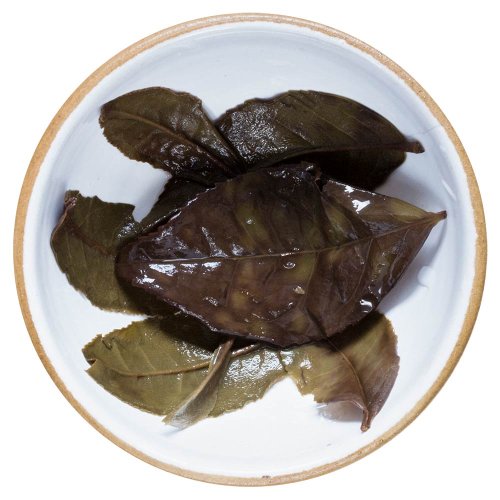
Pressing the leaves into small dragon balls protects their integrity while allowing for easy portioning. Each ball slowly unfurls during brewing, offering a balanced and layered experience—well suited both for relaxed daily drinking and for multiple infusions prepared in the gongfu style.
This aged white tea from Taimushan beautifully illustrates why aged white teas are so highly valued in China: they unite softness, depth, and the quiet influence of time. A tea that does not rush—one that grows calmer, warmer, and more profound with every passing year.
Fuding White Tea 福鼎白茶 - The Elegance of Simplicity
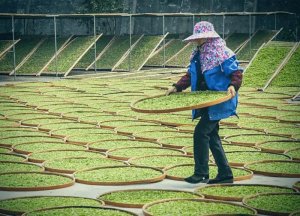
High in the mist-veiled mountains of Fuding 福鼎 in northern Fujian, tea bushes stretch across terraces bathed in gentle sunlight. The morning dew still clings to their tender buds, their downy hairs shimmering like silver threads. Villagers gather the leaves with practiced hands, spreading them out beneath the open sky to wither naturally. The air fills with the soft fragrance of herbs, flowers, and honey — the first whispers of what will become Fuding White Tea, a drink celebrated for its purity, elegance, and remarkable ability to transform with age. Fuding White Tea is a paradox: born of simplicity yet layered with richness; a daily drink for villagers yet a prized treasure for collectors.
What Exactly Is Aged White Tea - Lao Bai Cha 老白茶?
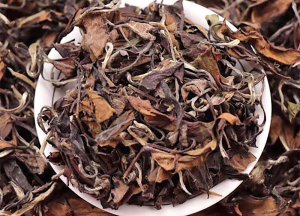
White tea (白茶 báichá) is one of China’s traditional six major types of tea. Its main production areas are in Fujian, particularly the counties of Fuding (福鼎), Zhenghe (政和), Jianyang (建阳), and Songxi (松溪). Because of its unique processing — no pan-firing and no rolling — the finished leaves are covered in fine white hairs, with a silver-white to gray-green appearance, hence the name “white tea”. White tea is a lightly fermented tea. Compared with other teas, its unique method preserves a large amount of beneficial compounds in the fresh leaves — tea polyphenols, theanine, flavonoids, caffeine, and soluble sugars. These contribute to its distinct flavor and notable health benefits.
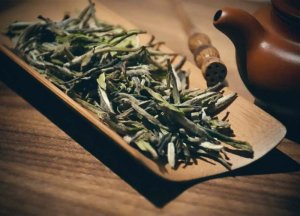
Shoumei 寿眉 vs. Gongmei 贡眉
According to The Great Dictionary of Chinese Tea (中国茶叶大辞典), “Shoumei is Gongmei. Gongmei is white tea produced in Jianyang 建阳, Jian’ou 建瓯, Pucheng 浦城 and other places. Its processing is basically the same as White Peony 白牡丹, but the raw material is leaves from the sexually propagated group variety of tea tree known as ‘cài chá 菜茶’. It is made from one bud with two or three leaves, processed through withering and drying. The finished tea has prominent fuzzy buds, greenish color, orange-yellow liquor, mellow refreshing taste, and pure fragrance. It is mainly sold in Hong Kong and Macau”.