
This classical formula belongs to the traditional system of Traditional Chinese Medicine (TCM) and is associated with the spleen and stomach, understood as the core of digestion and transformation of food and fluids. In TCM terminology, it is used in patterns described as dampness accumulation in the middle burner, traditionally associated with abdominal fullness, reduced appetite, a feeling of heaviness, and sluggish digestion. More
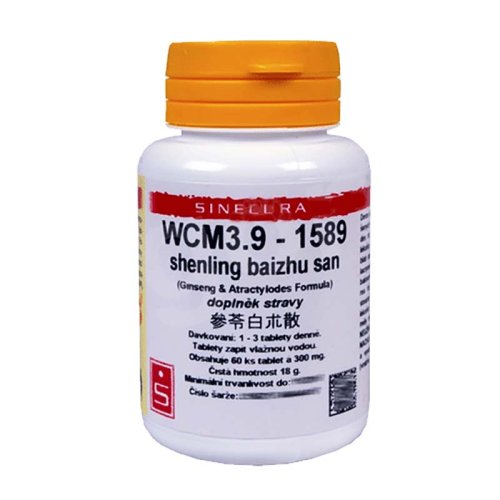
WCM3.9 – SHEN LING BAI ZHU WAN 参苓白术丸 - Ginseng, Poria & Atractylodes Pill
Herbal formula according to Traditional Chinese Medicine
This classical formula belongs to the traditional system of Traditional Chinese Medicine (TCM) and is associated with the spleen and stomach, understood as the core of digestion, absorption, and transformation of food and fluids.
In TCM terminology, it is used in patterns described as Spleen Qi deficiency with dampness, traditionally associated with fatigue, loose stools, reduced appetite, and a feeling of heaviness in the body.
Specific health effects cannot be claimed according to European Union legislation.
Characteristics according to TCM
This formula is primarily associated with:
- tonifying Spleen Qi
- removing dampness
- supporting digestion
- harmonizing the middle burner
Traditional composition and formula principles
The formula expands upon Si Jun Zi Tang with additional herbs targeting dampness and digestion:
- Ren Shen 人参, Bai Zhu 白术, and Fu Ling 茯苓 tonify Spleen Qi
- Shan Yao 山药 supports digestion and stabilizes the middle
- Lian Zi 莲子 and Bai Bian Dou 白扁豆 strengthen the spleen and address dampness
- Yi Yi Ren 薏苡仁 drains dampness
- Sha Ren 砂仁 promotes Qi movement and digestion
- Jie Geng 桔梗 helps distribute the formula’s effects
- Zhi Gan Cao 炙甘草 harmonizes the formula
This combination creates a balanced approach between tonification and elimination of dampness without burdening digestion.
In modern formulations, some ingredients may be adjusted in accordance with EU regulations.
Traditional use
In TCM terminology, the formula is used in patterns described as Spleen deficiency with damp accumulation.
These conditions may traditionally be associated with:
- fatigue and weakness
- loose or soft stools
- reduced appetite
- a feeling of heaviness in the body
These concepts are based on TCM diagnostics and do not represent modern medical diagnoses.
Warning
Not suitable for conditions described in TCM as Yin deficiency dryness without dampness.
Persistent or unclear symptoms should be evaluated by a qualified healthcare professional.
Dosage
Typically 3 times daily according to the manufacturer’s recommendation.
Packaging
60 tablets, 300 mg each
Other possible names
- shenlingbaizhu wan, shen ling bai zhu wan
- shenlingbaizhu tang, shen ling bai zhu tang
- shenlingbaizhu pian, shen ling bai zhu pian
| Country of origin | China |
|---|