

TEA - Form - powder tea

Hunan Golden Flower Hei Cha Powder | Hun Nan Jin Hua Hei Cha Fen
8,04 € excl. VAT

Fuding Jasmine Green Tea Powder | Mo Li Lu Cha Fen
11,61 € excl. VAT

Yunnan Black Tea Powder | Dian Hong Cha Fen
10,45 € excl. VAT

Anxi Oolong Powder | An Xi Tie Guan Yin Cha Fen
10,45 € excl. VAT

Huangshan Yellow Tea Powder | Huang Da Cha Fen
8,04 € excl. VAT

Huangshan Matcha | Huang Shan Mo Cha
8,04 € excl. VAT

Huangshan Green Tea Powder | Huang Shan Lu Cha Fen
10,45 € excl. VAT

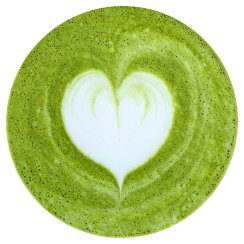
Hangzhou Matcha 500 g | Hang Zhou Mo Cha
63,75 € excl. VAT


Matcha Kagoshima CEREMONY ORGANIC | 30 g tin can (CZ-BIO-004)
25,27 € excl. VAT


Culinary Houjicha
17,95 € excl. VAT


Uji Matcha SURUGA 40 g in pull-up can 40 g | Matcha Asahi Ichibancha-KOPIE
17,59 € excl. VAT


Uji Matcha YATAKAGAMI 40 g in pull-up can 40 g | Matcha Samidori Ichibancha
40,62 € excl. VAT


Uji Matcha SURUGA 40 g in pull-up can 40 g | Matcha Asahi Ichibancha
25,89 € excl. VAT


Dandelion Root - Roasted Finely Ground | Pampeliška víly Smetánky
from 13,57 € excl. VAT
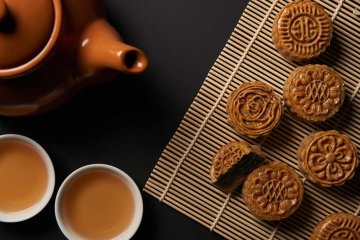
Before Mooncakes: How the Mid-Autumn Festival Evolved
A mooncake lies cut open on the table, with the fragrance of tea beside it. The family gathers as the moon rises above the rooftops. It is easy to picture the Chinese Mid-Autumn Festival, Zhongqiu Jie (中秋節), this way today. Yet this single scene brings together several layers of history. The calendar, rituals, poetry, city festivities and family obligations. What now feels like an established tradition took centuries to take shape.
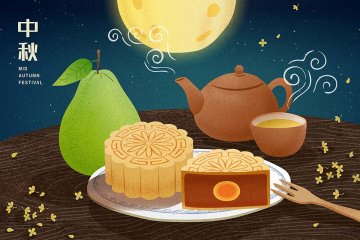
The Full Moon Woke Me. Time for Tea and a Mooncake
The full moon woke me.
And when you find yourself awake in the middle of the night, all sorts of thoughts may come to mind. Perhaps that, on the other side of the world, this very moon is a reason to gather with loved ones, share a sweet mooncake and pour some tea. To sit for a while. To look up.
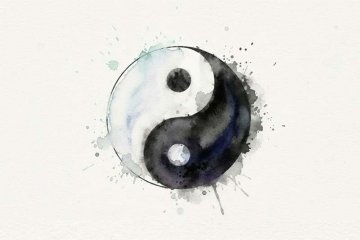
How the tàijí diagram 太极图 can help us understand the five organs
Traditional Chinese medicine does not view the body as a collection of separate parts, but as a living whole that continually adapts to its surroundings. This perspective is connected with the concept of Dào – the natural order or “Way” according to which everything arises, transforms, and returns to stillness. Dào need not be understood here as a religious rule or a precise guide to life. Rather, it refers to the natural course of things. Yīn and yáng represent two interconnected aspects of this movement.

Tea Through the Seasons: How Yin and Yang Transform in Nature
Throughout the year, nature constantly moves between two complementary forces – yin and yang. They are not opposites in the usual sense, nor do they represent good and bad. Yin is associated more with cold, stillness, moisture, darkness and inward movement. Yang is connected with warmth, light, activity, dryness and outward movement.
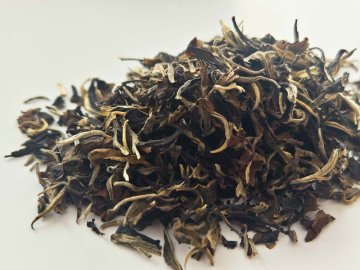
Yao Qing Style White Peony 摇青白牡丹
Among the traditional Chinese tea categories, white tea is often described as the simplest. The leaves are picked, allowed to wither and finally dried. There is no fixation as in green tea, no deliberate rolling and extensive oxidation as in black tea, and none of the elaborate zuo qing process associated with oolong. Yet simplicity does not mean inactivity. During the long hours of withering, the leaf remains alive and chemically active, slowly losing water while its aroma, taste and structure are transformed. Modern research into white-tea manufacture confirms that both prolonged withering and final drying play major roles in the formation of its characteristic aroma. It is precisely within this seemingly simple stage of withering that some contemporary tea makers have begun to experiment.

Famous Villages of the Bada Mountains: Zhanglang 章朗 and Manmai 曼迈
The Bada 巴达 Mountains are among the most important ancient tea-growing areas in the western part of Menghai County 勐海 in China's Yunnan Province. Although often overshadowed by more famous mountains such as Nannuo Shan or Bulang Shan, Bada is home to some of the most extensive populations of wild-growing tea trees in the entire Xishuangbanna Prefecture. In 2005, the former Bada township was administratively merged with Xiding 西定, under which the area remains today.

Ancient Tea Trees and Legends of the Jinuo Mountains 基诺
The Jinuo Shan 基诺山 mountain range, formerly known as Youle Shan 攸乐山, is one of the most famous tea-growing regions of China's Yunnan Province and is traditionally regarded as the first of the Six Ancient Tea Mountains (六大茶山). Today, it is known above all for its extensive groves of ancient tea trees (gushu 古树), many of which are several hundred years old. For the local Jinuo people 基诺族, however, tea has never been merely an agricultural crop. It is part of their identity, history and spiritual world, something still reflected in the legends passed down from generation to generation.

Summer Refreshment Beyond Tea
Tea is certainly not the only beverage enjoyed in China during the hottest days of summer. Traditional Chinese dietetics makes use of a wide variety of plants that have been associated with the summer season for centuries and are regarded as naturally cooling in their thermal nature. Some are prepared on their own as herbal infusions, while others have long been combined with green or white tea to create delicate summer blends.
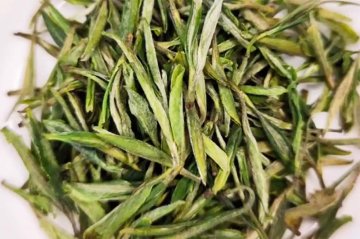
Jinzhai Yellow Large-Leaf Tea — The Golden Heritage of the Dabie Mountains
Deep in the heart of the Dabie Mountains 大别山, where the provinces of Anhui 安徽, Hubei 湖北 and Henan 河南 meet, lies Jinzhai County 金寨县—a land where tea has been cultivated for more than a thousand years. As early as the Eastern Jin dynasty 东晋, ancient texts such as Tongjun Lu 桐君录 praised the teas of western Anhui. During the Tang dynasty 唐朝, the region belonged to Huainan Circuit 淮南道, and Lu Yu 陆羽, later revered as the Sage of Tea, wrote in his Classic of Tea 茶经 that the teas produced here ranked among the finest in all of Huainan.

Xin Qiji | Ding Feng Bo – Reflections in Late Spring
The poem “定风波·暮春漫兴” (Ding Feng Bo – Reflections in Late Spring) is among the finest works of the celebrated poet Xin Qiji 辛弃疾 of the Southern Song dynasty. It was written during a period when, after years of political disputes and unsuccessful efforts to reclaim northern China, the author was forced to live in seclusion away from public life. This blend of unfulfilled ideals, memories of a passionate youth, and a gradual reconciliation with the passage of time runs throughout the poem. Xin Qiji masterfully weaves together images of wine, tea, the spring wind, and falling blossoms to capture the transformation of human life from youthful passion to quiet contemplation.


Advisor

How to perfectly prepare tea?
What is perfect for one person may not be for another. We should prepare tea so that it tastes good to us above all. Our satisfaction will also carry over to others. The experience of tasting tea is influenced by many factors. These include, of course, the quality of the tea itself, the quality of the water used, the material and shape of the teaware, the method of preparation, but also, for example, ambient temperature and humidity, the environment, food consumed beforehand, and last but not least, our mood.
But let’s think a bit more about tea preparation...

How to properly brew Japanese green tea?
In principle, the steeping procedure is always the same, but the amount of tea, water temperature, steeping time, etc. can be different for each individual type of tea. There is no manual that teaches us one ideal way to make the perfect cup of tea. Although certain types of tea should be prepared in specific ways, it is most important to use a correct water temperature and adjust the steeping time to your personal taste preferences. Brewing parameters can also change with respect to differences in the content of mineral substances in the water.

How to make Hong Kong style Milk Tea?
Hong Kong milk tea is second to none. If you are a tea lover, this is one thing you must experience in your life. It has a creamy texture with a sweet and rich flavor and is great both hot and iced. It probably goes without saying that you will enjoy Gang Shi Nai Cha 港式奶茶 most in Hong Kong, not only because of the authentic environment, but also because of the local original recipes, which are often strictly guarded. Authentic Hong Kong milk tea has its own viscosity, texture, taste and aroma as well as color. After a certain time spent in Hong Kong, it will become indispensable and irreplaceable for you.


