

TCM - In stock


YaoMedica 132 GAN CAO XIE XIN TANG – Silken Centre - tincture 50 ml
10,45 € excl. VAT


YaoMedica 131 QI JU DI HUANG WAN – Hawk Eye - tincture 50 ml
10,45 € excl. VAT


YaoMedica 130 DAO CHI WAN – Clear Spring - tincture 50 ml
10,45 € excl. VAT


YaoMedica 129 JIN GUI SHEN QI WAN – Spark of Life - tincture 50 ml
10,45 € excl. VAT


YaoMedica 128 ZUO GUI WAN – Left bean - tincture 50 ml
10,45 € excl. VAT


YaoMedica 127 XIANG SHA LIU JUN ZI TANG – Full Center - tincture 50 ml
10,45 € excl. VAT


YaoMedica 126 SHENG MAI YIN – Pulse Nourishment - tincture 50 ml
10,45 € excl. VAT


YaoMedica 125 CHAI HU GUI ZHI TANG – Eastern Treasure - tincture 50 ml
10,45 € excl. VAT


YaoMedica 124 BAI HU TANG – The Great Four - tincture 50 ml
10,45 € excl. VAT


YaoMedica 123 QING ZAO JIU FEI WAN – Dried Spring - tincture 50 ml
10,45 € excl. VAT


YaoMedica 122 YIN QIAO SAN – Tiger Drink - tincture 50 ml
10,45 € excl. VAT


YaoMedica 121 JIA WEI XIAO YAO SAN – Drink of Freedom - tincture 50 ml
10,45 € excl. VAT


YaoMedica 120 XIAO TAN JIE YU FANG – Zen Elixir - tincture 50 ml
10,45 € excl. VAT


YaoMedica 119 XIAO CHAI HU TANG JIA WEI – Sensitive Pelvis - tincture 50 ml
10,45 € excl. VAT


YaoMedica 118 YI GAN SAN – Calming the Liver - tincture 50 ml
10,45 € excl. VAT


YaoMedica 117 XIANG SHANG PO DI WAN – Broken Flute - tincture 50 ml
10,45 € excl. VAT
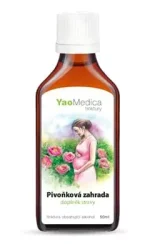

YaoMedica 116 DANG GUI SHAO YAO TANG – Peony Garde - tincture 50 ml
10,45 € excl. VAT


YaoMedica 115 SHENG MING XI FENG TANG – Aspen Soothing - tincture 50 ml
10,45 € excl. VAT


YaoMedica 114 GE XIA ZHU YU TANG – Centre Drive - tincture 50 ml
10,45 € excl. VAT


YaoMedica 113 SI MIAO SAN – Four Miracles - tincture 50 ml
10,45 € excl. VAT
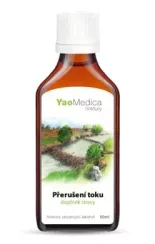

YaoMedica 112 GU BEN ZHI BENG TANG – Flow Interruption - tincture 50 ml
10,45 € excl. VAT


YaoMedica 111 JIAN TANG WAN – Sugar Loaf - tincture 50 ml
10,45 € excl. VAT


YaoMedica 110 KAI XIN SAN – Morning smile - tincture 50 ml
10,45 € excl. VAT


YaoMedica 109 TAO HONG SI WU TANG – Flow Release - tincture 50 ml
10,45 € excl. VAT
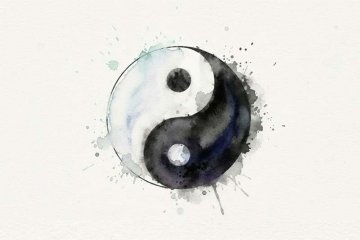
How the tàijí diagram 太极图 can help us understand the five organs
Traditional Chinese medicine does not view the body as a collection of separate parts, but as a living whole that continually adapts to its surroundings. This perspective is connected with the concept of Dào – the natural order or “Way” according to which everything arises, transforms, and returns to stillness. Dào need not be understood here as a religious rule or a precise guide to life. Rather, it refers to the natural course of things. Yīn and yáng represent two interconnected aspects of this movement.

Tea Through the Seasons: How Yin and Yang Transform in Nature
Throughout the year, nature constantly moves between two complementary forces – yin and yang. They are not opposites in the usual sense, nor do they represent good and bad. Yin is associated more with cold, stillness, moisture, darkness and inward movement. Yang is connected with warmth, light, activity, dryness and outward movement.
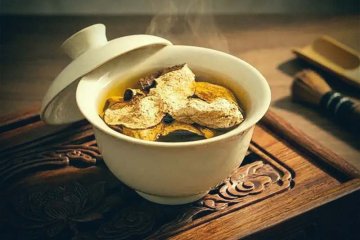
Chen Pi 陈皮 – Time Hidden in Mandarin Peel
Chen Pi 陈皮 may at first glance seem like nothing more than ordinary mandarin peel, but in Chinese tradition it is far more than simply dried citrus rind. Once properly processed, it becomes an ingredient that continues to transform with time – its aroma softens, its flavour becomes rounder, and deeper notes of herbs, spices, wood and dried fruit gradually emerge. This is precisely why Chen Pi is so fascinating not only in Chinese cuisine and Traditional Chinese Medicine, but also in the world of tea, where it naturally complements Pu-erh, Liu Bao and other teas suited to long-term ageing.

Chunfen 春分 | Between Yin and Yang – the Quiet Beginning of Spring
Every year, around March 20, there comes a moment that is almost invisible at first glance — and yet essential. In Europe, we perceive it as the first true day of spring, the time when light begins to clearly return and the days grow longer. In traditional Chinese culture, this moment has its own name and deeper meaning: 春分 (Chūnfēn), the Spring Equinox. Day and night are equal, yin and yang briefly come into balance. It is not the victory of one force over another, but a quiet point of equilibrium from which movement begins.

When the Mind Cannot Fall Asleep – The Silence That Does Not Come
Sometimes the problem is not that we are not tired. On the contrary — the body longs to rest, but the mind keeps going. It returns to conversations that have already taken place, replays situations that can no longer be changed, and creates new scenarios that may never happen. While the world around us grows quiet, something inside lights up. In Traditional Chinese Medicine, this state is described as 心神不宁 (xīn shén bù níng) — the spirit is not at rest.

Tea and Health: Traditional Chinese Perspectives and Cultural Wisdom
Tea has been part of East Asian culture for thousands of years. Beyond its aroma and taste, it has traditionally been associated with balance, longevity, and harmony with nature. In Chinese culture and in the framework of Traditional Chinese Medicine (TCM), tea is often viewed as a drink that supports everyday wellbeing when enjoyed regularly and in moderation.

When Fire Seeks Water
Desire is like steam rising from a cup.
At first you barely notice it – a light mist above the surface.
Then it lifts, thickens, veils your face, enters your lungs.
And suddenly it cannot be ignored.

Flame on the Back of the Wind: The Story of the Year of the Fire Horse (bing-wu 丙午)
When the Laba Festival (腊八) fades in the Chinese calendar, it is said that the New Year is already standing at the door. In the sixty-year cycle of Heavenly Stems and Earthly Branches, the combination 丙午 (bing-wu) arrives – a year traditionally known as the Fire Horse. The Heavenly Stem “丙” belongs to yang Fire, while the Earthly Branch “午” corresponds to the Horse and is itself associated with the element of Fire within the system of 五行 (wu xing). Fire is therefore multiplied here – forming the image of a “double flame,” an energy that shines, warms, and burns.

Great Cold 大寒 – Winter Holding the Breath of Spring
Around January 20, when the Sun reaches 300° ecliptic longitude, the Chinese calendar enters a period known as Great Cold (大寒, Dàhán). It is the last of the 24 solar terms — the coldest point of the year and at the same time a quiet threshold of a new beginning. Winter is taking its leave; spring is only just beginning to breathe. The twenty-four solar terms arose from observing the sky, the landscape, and the rhythms of life. Much like tea. The planting, harvesting, processing, and drinking of tea naturally intertwine with these periods. Each of them gives tea a distinct character, flavor, and effect. Tea thus becomes not only a beverage, but a guide through the year.

Tea and Body Constitution in Traditional Chinese Thought
Ancient texts often connect tea with health. For example, the Bencao Yanyi records a story: “Shennong tasted hundreds of herbs daily and encountered 72 poisons, which he neutralized with tea.” In traditional Chinese medicine (TCM), tea is considered both a drink and a medicinal herb. Because each person’s body is different, and each tea has its own nature and flavor, choosing the right tea for your constitution is seen as a way to support balance more effectively.


Advisor

How to deliciously prepare Job's tears (Yi Yi Ren 薏苡仁)
In China, a decoction of the Job's tears (YiYi Ren 薏苡仁) has always been considered very healing for seriously ill patients. Chinese medicine describes a so-called slime-like soup that reliably works for stomach and intestinal weakness, binds toxins from metabolism and supports liver function. Holistic medicine considers Job's tears to be a food that can soften and emollient, which is why they are said to help release animal fats and hardened deposits of harmful substances from the body, reduce "bad" cholesterol and women in particular will appreciate its beneficial effect on the skin, which it keeps soft and supple. According to TCM, it even protects against skin inflammation and slows down the graying of hair. During the childhood, we will appreciate its effect in treating warts.

When It's Hot, Don't Just Drink Cold. Learn to Cool Yourself with Tea.
Why are green and white teas considered naturally cooling according to traditional Chinese dietetics? Why do people in China, Japan, and Taiwan often sip hot tea during the hottest days of summer instead of reaching for ice-cold drinks? And how can you prepare the perfect iced tea, Cold Brew, or the Japanese Kōridashi 氷出し at home? Join us on a journey into the world of tea culture, where true refreshment comes not only from the temperature of the drink itself, but above all from its natural thermal nature.