The Full Moon Woke Me. Time for Tea and a Mooncake
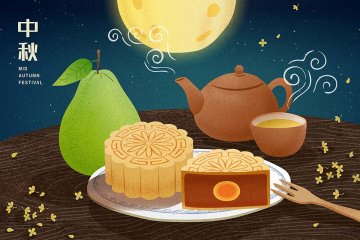
The full moon woke me.
And when you find yourself awake in the middle of the night, all sorts of thoughts may come to mind. Perhaps that, on the other side of the world, this very moon is a reason to gather with loved ones, share a sweet mooncake and pour some tea. To sit for a while. To look up.
The Chinese Mid-Autumn Festival, Zhongqiu Jie (中秋節), also known as the Mooncake Festival, falls on the fifteenth day of the eighth month of the traditional Chinese lunisolar calendar — in September or October by our calendar. It is associated with the full moon and family gatherings. The round moon symbolises wholeness and reunion — the wish that those who belong together might be together once again. But why “mid-autumn” when autumn has barely begun here? The traditional Chinese calendar divided each season into three months. The eighth month was the middle month of autumn, known as zhongqiu (仲秋). This is also where the festival gets its name. Its autumn follows a different division of the year from the one we are used to. The celebrations themselves have changed over time, too. Their history brings together moon worship, evenings of poetry, feasts and family gatherings. Moon gazing and poetry flourished during the Tang dynasty (唐), while the Song period (宋) left us vivid accounts of festivities filled with wine and nightlife. Later sources place particular emphasis on family reunions and the giving of mooncakes. Today’s quiet gathering has quite a lively past.
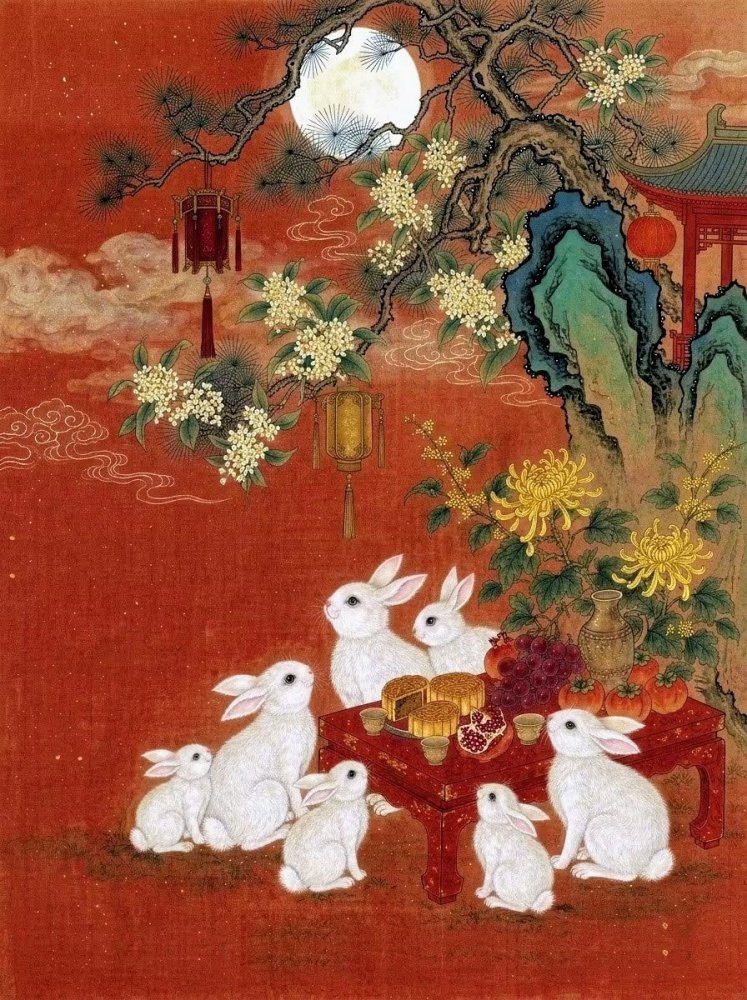
There is something deeply familiar about the idea of an evening together, even for those of us who did not grow up with this festival. Autumn makes us want to draw a little closer, warm our hands around a cup and make time for someone. Sometimes it also makes us more aware of those whose place at the table remains empty. Looking at the moon can then become a simple way of feeling close, for a moment, to someone far away.
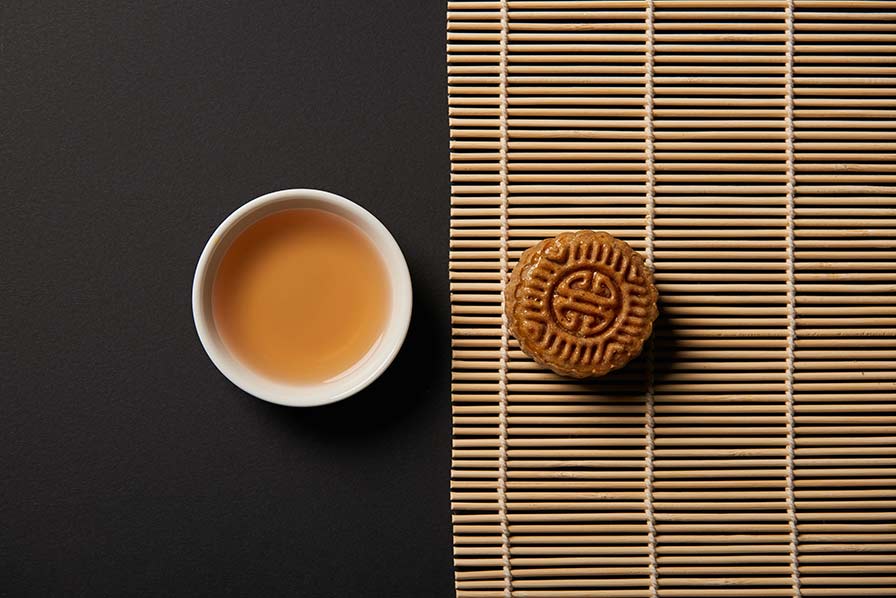
Mooncakes, known in Chinese as yuebing (月餅), are part of the celebration. Familiar varieties include those filled with a rich lotus seed paste and salted egg yolk. Today, there are many modern variations, too. The cakes are cut into small pieces and shared; their round shape is another reminder of togetherness. In Hong Kong, the festival is also associated with osmanthus, whose blossoms lend their fragrance to tea or wine.
Tea has a place of its own at today’s festive table. A sweet, rich mooncake calls for a small bite followed by a sip of something unsweetened. For my own autumn table, I would try a lightly roasted oolong; its aroma feels right for an evening like this. Those who enjoy earthier notes might reach for a shu pu-erh. Tea gives any gathering a gentle rhythm. The water warms, the leaves unfurl, the cups are filled. Between infusions, a little time opens up that need not immediately be filled with conversation. Silence, too, can have its place at a shared table.
The fourth chapter of the Tao Te Ching (道德經) offers an image of the Tao as an empty vessel whose possibilities are never exhausted by use. At the tea table, this image reminds me that open space has a value of its own: in a cup, in a room and in the time we set aside for another person. The full moon offers another image. Today it is full; in the days ahead, it will begin to wane. Its beauty will not be spent in the process. Perhaps we, too, can allow ourselves to wax for a while and wane for a while, to finish something and then rest. To let go of the need to remain full at any cost.
For tonight, a teapot, a small cup and a place by the window are enough. If there were a mooncake here, I would share it. And if someone else were sitting beside me, I would pour them a cup, too.
The full moon woke me.
So I stayed awake a little longer.