

Chen Pi 陈皮 – Time Hidden in Mandarin Peel
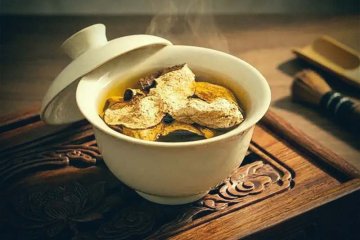
Some things are best when fresh. Others need time. The world of tea knows this very well – fresh spring greens have their own unmistakable charm, the fragrance of gardens just awakening and the vitality of young leaves, while for other teas the harvest is only the beginning of their story. Pu-erh, Liu Bao or a well-stored white tea can, over the years, acquire depth and new layers of aroma and flavour that simply were not present in the young tea. Here, time is not merely a date on the packaging, but one of the elements that shape the final character. In China, there is another seemingly modest ingredient for which time has become almost part of its very name – Chen Pi 陈皮, dried mandarin peel that gradually matures with age.
At first glance, it may be difficult to understand why an entire culture has grown around something so ordinary. You take a mandarin, remove the flesh and dry the peel. Yet precisely where the story of ordinary citrus peel would end, the story of Chen Pi is only just beginning. Properly processed peel can be stored for years, sometimes even decades, while its character slowly transforms. The sharp freshness of young citrus gradually recedes, the aroma becomes rounder, and deeper notes of dried fruit, sweet spices, herbs and wood begin to emerge from what was originally a bright mandarin fragrance. The colour darkens, the aroma gains further layers, and what began primarily as citrus peel becomes a far more complex ingredient with time. It is therefore no coincidence that the very name Chen Pi 陈皮 carries the idea of time within it. 陈 Chén refers to something old, aged or matured, while 皮 Pí simply means peel or skin. Two ordinary characters thus capture the essence of the entire tradition: a peel whose true character is shaped not only by the mandarin and the way it is processed, but also by time.
Xinhui 新会 – home of the most famous Chen Pi
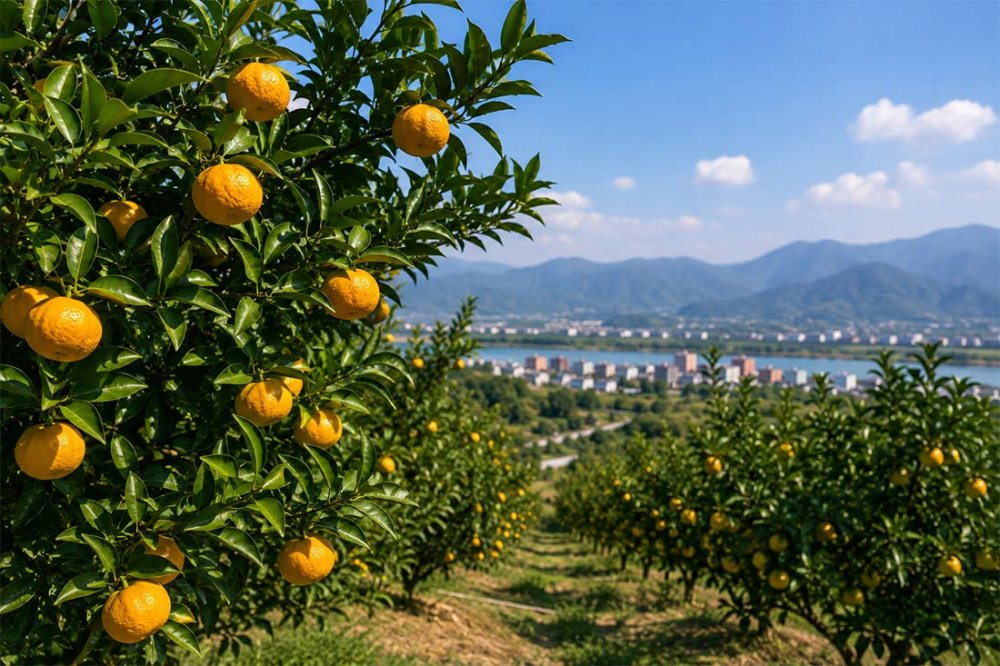
Although Chen Pi is produced from the peel of the mandarin Citrus reticulata and its cultivars in various parts of China, one name stands above all others: Xinhui 新会. Today, Xinhui is an urban district in Guangdong Province in southern China, part of Jiangmen, in a landscape shaped by the Pearl River Delta and the proximity of the South China Sea. It is here that the celebrated Xinhui Chen Pi 新会陈皮 is produced, regarded in China as one of the most important forms of this traditional ingredient.
The local tradition of mandarin cultivation dates back at least to the Song dynasty, and by the Ming and Qing dynasties Chen Pi from Xinhui had already become a highly prized commodity. Old regional records even note that the peel developed an even more pronounced fragrance after being transported north. Xinhui Chen Pi gradually became so closely associated with its place of origin that today it represents not only a food ingredient and traditional materia medica, but also one of the cultural symbols of the entire region. The particular conditions of Xinhui are an important part of its reputation. The area lies where different water systems meet and where freshwater and brackish influences intermingle. The humid subtropical climate, local soils and mandarin trees selected over centuries together produce exceptionally aromatic peel rich in essential oils.
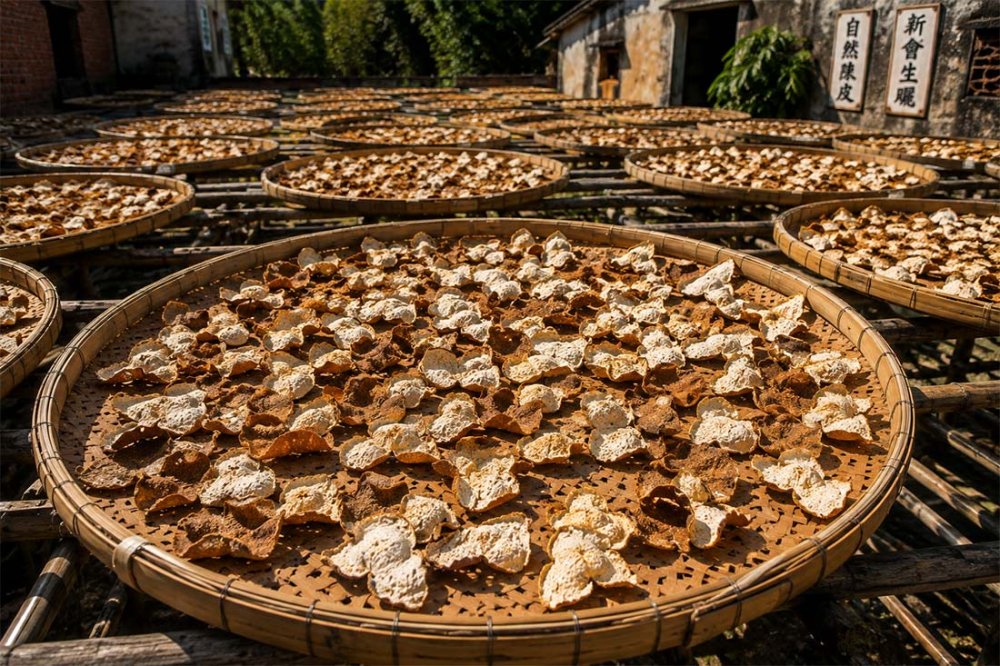
The beauty of traditional processing lies in its simplicity. The fruits are harvested and washed, and the peel is carefully opened, typically so that it remains connected in its characteristic three-lobed shape. This is followed by withering, turning the peel inside out, sun-drying and finally the most important part – Chen 化, ageing and transformation through time. With traditional Xinhui Chen Pi, this cycle continues over several years; younger peels are taken out again in suitable weather, inspected and dried further. The traditional production technique of Xinhui Chen Pi was included in China's national list of intangible cultural heritage in 2021.
Chen Pi from the perspective of Chinese medicine
Chen Pi has also held an important place in Traditional Chinese Medicine for centuries. In its terminology, it is characterised as pungent and bitter, with a warm thermal nature, and is traditionally associated primarily with the Spleen and Lung meridians. Classical texts discuss Chen Pi in connection with the regulation of Qi 气 and with the traditional concepts of Shi 湿 – Dampness and Tan 痰 – Phlegm.
It is important to understand these terms in their original context. “Dampness”, “Phlegm”, “Spleen” and even “Qi” in Chinese medicine are not simply translations of diagnoses or anatomical concepts used in Western medicine. They belong to a distinct system through which Chinese medicine has described relationships and processes within the body for centuries. From the perspective of tea, however, another parallel is perhaps even more interesting: Traditional Chinese Medicine also recognised the importance of age in Chen Pi. Freshly dried mandarin peel and Chen Pi that has been stored for several years are not regarded as exactly the same material. Time changes its aroma, taste and overall character – much as it does with certain teas.
Chen Pi and tea
And it is here that the world of Chen Pi naturally meets the world of tea. Both know withering, drying, storage and time. Both can age, and after several years both may smell completely different from when their journey began. It is therefore hardly surprising that mandarin peel has become a natural companion particularly to teas that themselves have a close relationship with long-term ageing.
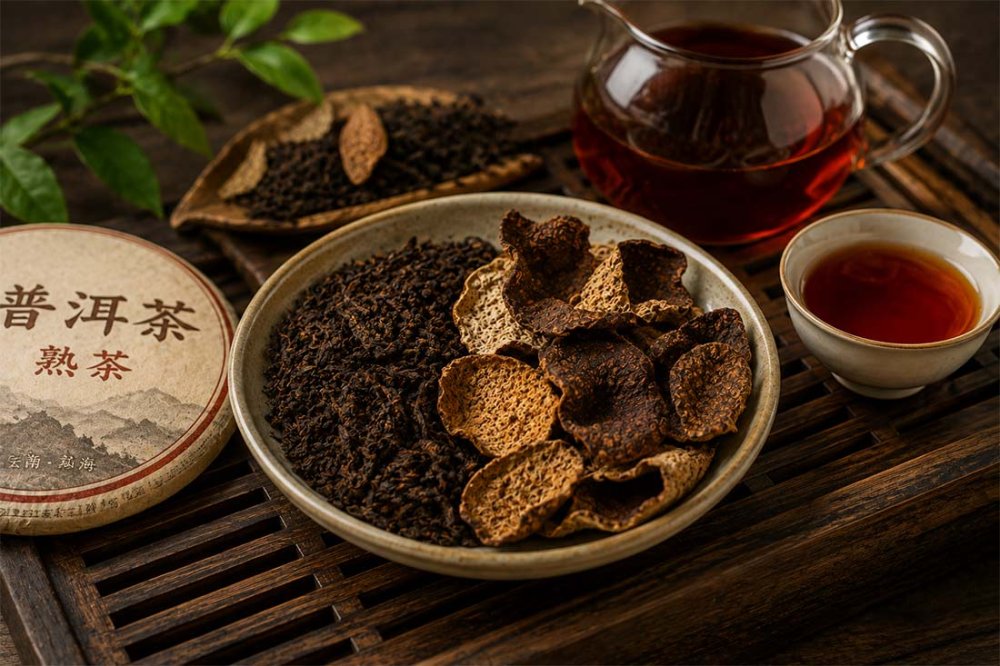
The best-known pairing is with Pu-erh. A piece of Chen Pi added to Shu Pu-erh can open up its deep earthy, woody and sweet notes with a vivid citrus fragrance. At first, the mandarin clearly comes to the foreground, but with subsequent infusions its character softens and begins to merge with the tea. Instead of two separate flavours, a single infusion gradually emerges – dark, sweet and woody, yet illuminated by the fragrance of citrus peel. This pairing also gave rise to the well-known Gan Pu Cha 柑普茶, in which tea is placed directly inside hollowed-out citrus fruits and then dried and allowed to develop together. In Xinhui, combining Chen Pi with tea has become such an important part of local culture that today, alongside Pu-erh, we also find combinations with white, black and other types of tea.
Chen Pi, however, does not need to be purchased already combined with tea. Quite the opposite – using a few small pieces of the peel on their own makes it easy to adjust the ratio to taste. Besides Shu Pu-erh, it is well worth trying with Liu Bao, aged white teas, more heavily roasted oolongs or Chinese red teas. Each allows the mandarin to express itself in a slightly different way.
A peel that does not need to be used straight away
Perhaps one of the most beautiful things about Chen Pi is that its story does not have to end at the moment of purchase. We can use some with tea or in the kitchen and simply leave the rest to time. For ageing at home, Chen Pi needs above all a dry, clean environment, a stable room temperature and protection from foreign odours. It should not be exposed to high humidity or sealed airtight for many years without being checked. Traditionally, the peel is inspected regularly, and younger Chen Pi is also aired and dried again during suitable dry weather. Under European household conditions, the most important thing is to protect it from humidity and occasionally check how your supply is developing. You can write the year in which you stored your Chen Pi on the packaging and then simply wait. Open it after a year, three years or perhaps ten, and compare its fragrance with a newly dried peel.
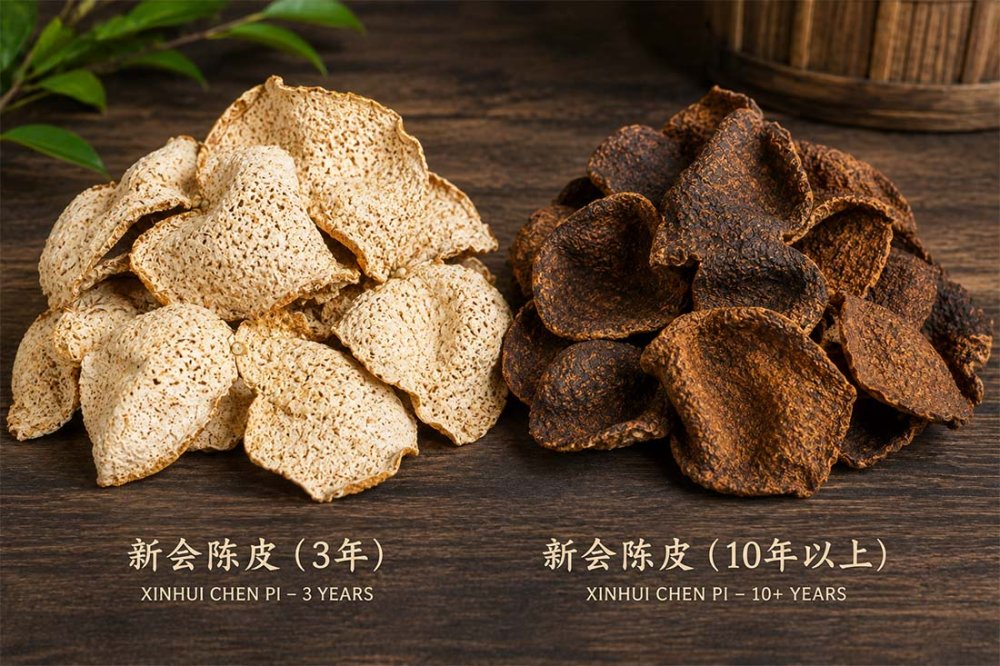
Tea teaches us that some transformations cannot be rushed. They need time, the right conditions and, above all, patience. What is fresh, vivid and perhaps a little straightforward today may, after years, acquire depth, tranquillity and nuances that were almost impossible to recognise at the beginning. Chen Pi tells essentially the same story – only instead of a tea leaf, it is told by an ordinary mandarin peel. And perhaps that is precisely why Chen Pi and tea understand each other so well.
Recommended products1
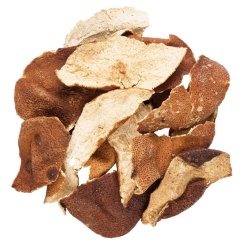
2023 Chen Pi – Dried Mandarin Peel
8,57 € excl. VAT