Before Mooncakes: How the Mid-Autumn Festival Evolved
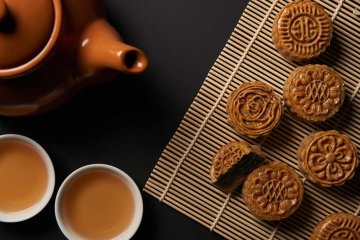
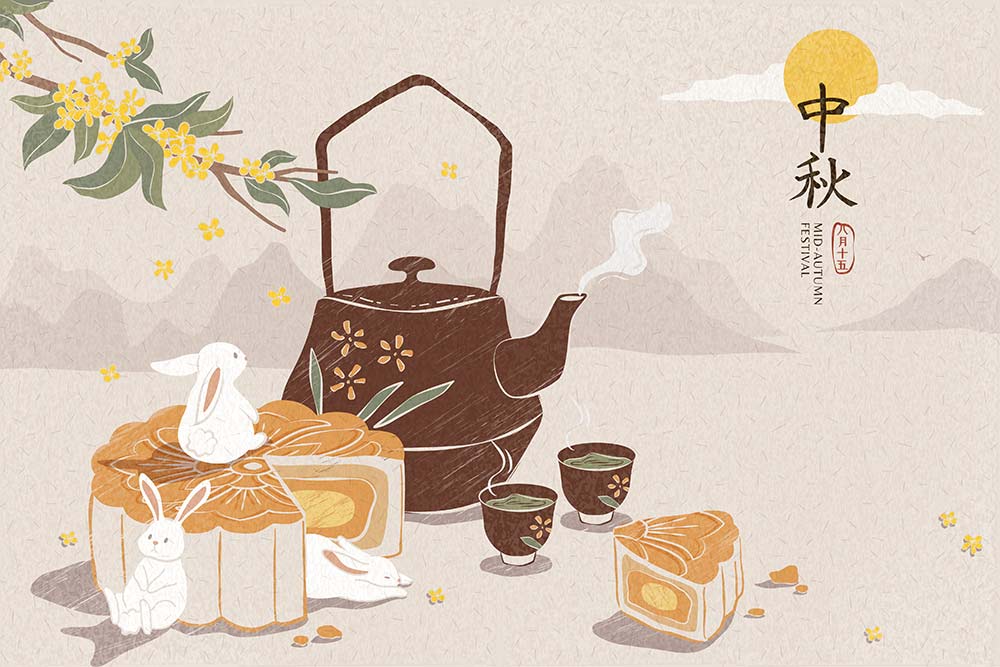
A mooncake lies cut open on the table, with the fragrance of tea beside it. The family gathers as the moon rises above the rooftops. It is easy to picture the Chinese Mid-Autumn Festival, Zhongqiu Jie (中秋節), this way today. Yet this single scene brings together several layers of history. The calendar, rituals, poetry, city festivities and family obligations. What now feels like an established tradition took centuries to take shape.
We can begin with the name itself. In the traditional Chinese division of the year, each season had three months: the first, the middle and the last, denoted by the characters meng (孟), zhong (仲) and ji (季). The eighth month was the middle month of autumn, or zhongqiu (仲秋). The identically pronounced character zhong (中), familiar from the festival’s name today, means “middle”. The expression zhongqiu (中秋) already appears in the ritual text Zhouli (周禮), commonly known in English as the Rites of Zhou. It occurs in connection with the autumn welcoming of the cold. This reference, however, does not yet establish the existence of the festival as we know it today. The name for a part of the year predates the established celebration of a particular day.
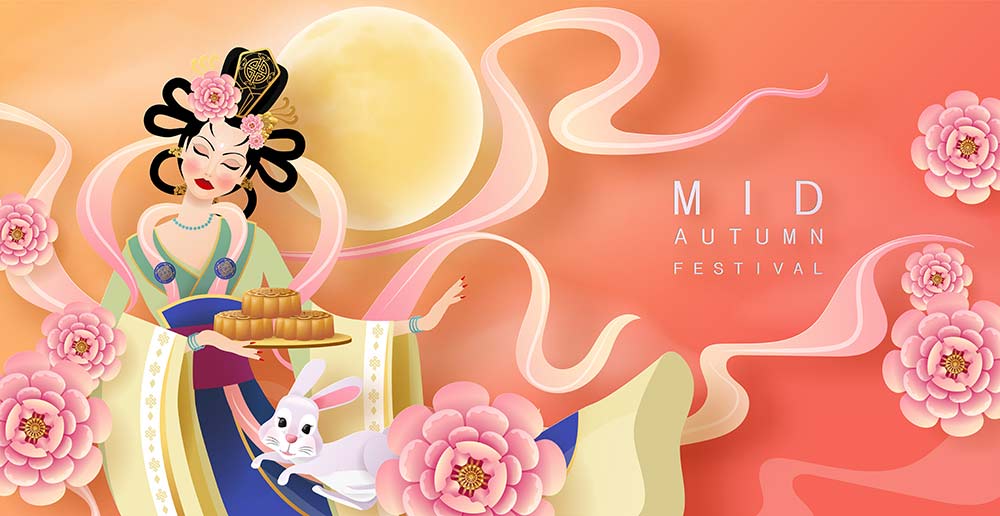
The festival’s roots are often linked to ancient rituals of moon worship and thanksgiving for the harvest. It is natural that an agricultural society would turn its attention to the sky: celestial cycles helped people measure time and gave a rhythm to both work and celebration. These connections, however, do not allow us to identify a single moment when someone “founded” the Mid-Autumn Festival. Its emergence was more a gradual coming together of different customs. The moon also offered a home for stories. Among its figures are Chang’e (嫦娥), associated with the elixir of immortality and an ascent to the moon, and the Jade Rabbit, yutu (玉兔). These tales exist in different versions. Together, though, they create a world in which that distant light in the sky acquires inhabitants, destinies and emotions.
During the Tang dynasty (唐, 618–907), poetry offers vivid testimony to the autumn custom of moon gazing. A moonlit night becomes an occasion to gather, feast and compose verses. Yet it can just as easily deepen the loneliness of someone far from home. The poet Wang Jian (王建) captured such an evening in Shiwu ye wang yue ji Du langzhong (十五夜望月寄杜郎中), a title that translates roughly as “Gazing at the Moon on the Fifteenth Night, Sent to Official Du”. Moonlight lies across the courtyard, crows rest in the trees, and cool dew silently moistens the osmanthus blossoms. The closing lines turn from this particular garden towards everyone beneath the same sky:
今夜月明人盡望,不知秋思落誰家?
In a free translation: “Tonight, everyone gazes at the bright moon. Whose home, I wonder, will autumn’s longing fall upon?”
Here, the connection between the full moon and the longing for closeness becomes especially clear. The moon may be whole while those who belong together are scattered far apart. Its light cannot erase the distance between them, but it lets them imagine the other person looking up at that very moment.
During the Song dynasty (宋, 960–1279), surviving accounts of city life give the celebrations a much livelier character. In Dongjing meng hua lu (東京夢華錄), Meng Yuanlao (孟元老) recalls life in the Northern Song capital, present-day Kaifeng (開封). His account of the festival is fragrant with wine, ripe fruit and fresh food. Shops sell new wine and decorate their fronts. Crabs, pomegranates, pears, chestnuts and grapes appear in the markets. Wealthy households prepare their terraces, while others seek a place in a tavern from which to watch the moon. Music fills the air, and the revelry continues long after dark. This is a glimpse of one particular city, rather than a complete picture of every household at the time. Even so, it reminds us of something easily lost in today’s peaceful photographs of tea tables: the autumn moon was also an occasion to go out, drink, listen to music and enjoy the city.
Sources from the Ming period (明, 1368–1644) give particular prominence to offerings to the moon, mooncakes and family bonds. The Beijing text Dijing jingwu lüe (帝京景物略) describes the ritual held on the fifteenth day of the eighth month and stresses the roundness of the fruit and cakes offered. Shape becomes a way of expressing a wish: the circle represents wholeness and family reunion. The mooncake, yuebing (月餅), thus belongs to the worlds of ritual offerings, gifts and shared food alike. It may be offered to the moon, given to relatives or divided among those at the table. One small object expresses respect, connection and the wish to be together.
Older customs did not disappear all at once. Moon gazing, rituals, feasts and family gatherings could exist side by side. Their significance changed with the period, the place and the individual household. The festival’s history is richer than a simple progression from poems to rituals and from rituals to cakes.
And where does tea belong in this story? At today’s celebrations, it has a natural place alongside mooncakes and time spent together. The historical account of the Song city, however, gives particular emphasis to wine. It would therefore be misleading to project our present-day evening over tea a thousand years into the past without allowing for any change. Today, tea lets us find our own way into the tradition — through flavour, hospitality and time given to others.
The Tao (道), too, can offer a gentle accompaniment to our reflections today. The changing moon presents an image of alternating fullness and waning that invites such a reading. The festival itself, however, grew out of many cultural and social contexts; its history cannot be contained within a single philosophical tradition.
People have gazed at the same moon for centuries. Some place offerings before it, others write poems about it, and others raise a cup beneath it or think of home.
And somewhere today, someone cuts a mooncake, pours some tea and draws one more chair up to the table.